ESS Strategy 2026-2031
Parliamentary approved
March 2026
ESS Strategy 2026-2031 – March 2026.pdf
Download pdf (26.12 MB)
This document may not be fully accessible.

Environmental Standards Scotland (ESS) is an independent body set up to ensure the effectiveness of environmental law, and prevent enforcement gaps arising from the UK leaving the European Union.
More about usOur aim is to publish as much information as we can about the work that we do.
In this section you will find various publications relating to our corporate governance, investigations and analytical work.
You will also find all minutes from our Board and Audit and Risk Committee meetings.
Our workOne of the ways in which we carry out our function is to investigate environmental concerns made to us.
In this section, find out what we can investigate, how to raise a concern and what cases we are currently working on.
Raise a concernKeep up to date with all the latest news about Environmental Standards Scotland (ESS) including latest publications, latest videos, blogs, investigation launches, calls for evidence and related information.
News
Parliamentary approved
March 2026
ESS Strategy 2026-2031 – March 2026.pdf
Download pdf (26.12 MB)
This document may not be fully accessible.

ESS Chair, Dr Richard Dixon
Scotland is rightly proud of its environment. But there is still much to do, particularly to deal with the twin climate and nature crises.
This new five-year Strategy sets out our approach in the next chapter of Environmental Standards Scotland’s (ESS) life. By making environmental law work better we have already made a difference: from taking action on air pollution to improving how sewer overflows are managed; and from protecting seals and dolphins from underwater noise to setting the agenda for the next phase of action on climate change.
This Strategy brings a strong focus on key priorities and builds on the experience of our first four years.
Protecting and improving the environment is important for both current and future generations. A healthy environment contributes to human health and wellbeing. And a healthy environment underpins a thriving and resilient economy.
In our world of short-term financial pressures and international tensions some people are raising questions about the importance of the environment, but failing to deal with climate change and nature loss now will end up costing us much more later. Even more importantly, swift action will make Scotland more resilient in preparation for a more chaotic climate.
We will continue to make sure that environmental law is being properly implemented, that individuals and communities have an opportunity to have their environmental concerns addressed and, where necessary, we will press for laws and standards to be improved, including learning from best practice around the world.
I am grateful to everyone who responded to the consultation on our draft Strategy. All of the comments and suggestions received have helped inform the drafting of this final version.

Dr Richard Dixon
ESS Chair, Dr Richard Dixon
Tha Alba gu ceart moiteil às an àrainneachd aice. Ach tha mòran ri dhèanamh fhathast, gu sònraichte airson dèiligeadh ris an dà èiginn gnàth-shìde agus nàdair.
Tha an Ro-innleachd ùr còig-bliadhna seo a’ mìneachadh ar dòigh-obrach anns an ath chaibideil de Inbhean Àrainneachdail na h-Alba’s life. Le bhith a’ toirt air lagh na h-àrainneachd obrachadh nas fheàrr tha sinn air eadar-dhealachadh a dhèanamh mar-thà: bho bhith a’ dèanamh gnìomh air truailleadh èadhair gu bhith a’ leasachadh mar a tha tar-shruthan sàibhear air an riaghladh, agus bho bhith a’ dìon ròin is leumadairean bho fhuaim fon uisge gu bhith a’ suidheachadh a’ chlàr-gnothaich airson an ath cheum de ghnìomhachd air atharrachadh clìomaid.
Tha an Ro-innleachd seo a’ toirt fòcas làidir air prìomh phrìomhachasan agus a’ togail air eòlas a’ chiad ceithir bliadhna againn.
Tha dìon agus leasachadh na h-àrainneachd cudromach dha na ginealaichean a th’ ann an-dràsta agus ri teachd. Tha àrainneachd fhallain a’ cur ri slàinte is sunnd dhaoine. Agus tha àrainneachd fhallain mar bhunait air eaconamaidh shoirbheachail agus tapaidh.
Anns an t-saoghal againn de chuideaman ionmhais geàrr-ùine agus teannachadh eadar-nàiseanta tha cuid de dhaoine a’ togail cheistean mu cho cudromach sa tha an àrainneachd, ach mura tèid dèiligeadh ri atharrachadh clìomaid agus call nàdair a-nis cosgaidh sin tòrr a bharrachd dhuinn nas fhaide air adhart. Nì gnìomh luath cuideachd Alba nas seasmhaiche mar ullachadh airson gnàth-shìde nas mì-rianail.
Leanaidh sinn oirnn a’ dèanamh cinnteach gu bheilear a’ cur an gnìomh lagh na h-àrainneachd gu ceart, gum bi cothrom aig daoine fa-leth agus coimhearsnachdan dèiligeadh ris na draghan àrainneachdail aca agus, far a bheil sin riatanach, brùthaidh sinn airson laghan agus inbhean a leasachadh, a’ gabhail a-steach ionnsachadh bho dheagh chleachdadh air feadh an t-saoghail. saoghal.
Tha mi taingeil don a h-uile duine a fhreagair a’ cho-chomhairle air an dreachd Ro-innleachd againn. Tha a h-uile beachd agus moladh a fhuaireadh air cuideachadh le bhith ag innse mu dhreachadh an dreach deireannach seo.
Dr Richard Dixon
1.1
Environmental law exists to protect and improve the environment and human health. Public authorities have an essential role to play in complying with this law and ensuring that it is implemented effectively. ESS’ task is to scrutinise how well these organisations are doing this.
1.2
ESS monitors, investigates and secures public authorities’ compliance with environmental law in Scotland. We also scrutinise the effectiveness of environmental law and policy in Scotland and how it is implemented and applied. In our investigative and analytical reports, we may also identify instances where we consider there to be gaps in environmental protection legislation.
1.3
ESS is an independent non-ministerial office which is directly accountable to the Scottish Parliament. The UK Withdrawal from the European Union (Continuity) (Scotland) Act 2021 (‘the Continuity Act’) protects ESS’ independence and ensures that Scottish Ministers cannot direct our work.
1.4
We scrutinise a wide range of public authorities (as defined in the Continuity Act) including the Scottish Government, regulatory bodies (such as the Scottish Environment Protection Agency and NatureScot), local authorities, Scottish Water and a number of organisations which perform functions of a public nature.
1.5
ESS can decide on which areas of environmental law (as defined in the Continuity Act) it will scrutinise, and we also respond to concerns about environmental law raised with us by the public. We have significant powers that we can use to protect and improve the environment.
1.6
ESS is not an appeals body for individual regulatory decisions made by other organisations (for example, relating to planning decisions, environmental licences or permits or regulatory enforcement in specific cases). However, we will consider whether such decisions might indicate systemic or cumulative problems with compliance, or with the effectiveness of environmental law.
1.7
We will continue to liaise with and coordinate our work with other scrutiny and appeal bodies to avoid overlap. For example, we will liaise regularly with other scrutiny bodies (such as Audit Scotland) to identify where we can add most value. Where necessary we have agreed a Memorandum of Understanding (MoU) to set out our collaborative approach, for example, with the Climate Change Committee. These MoUs are published on our website. In addition, we will signpost to other bodies that may be better placed to deal with specific concerns, such as the Scottish Public Services Ombudsman, the Commissioner for Ethical Standards in Public Life in Scotland and the Scottish Information Commissioner. We provide regular updates on our work to the Scottish Parliament and liaise with Committee Clerks and the Scottish Parliament Information Centre to ensure that our work adds value to Parliamentary scrutiny and to the work of any relevant Scottish Parliament committee. We will review our MoUs, signposting and liaison arrangements with other organisations and, where necessary, discuss with relevant organisations how best to address any overlaps in our remit that are identified. Furthermore, ESS will continue to contribute to consideration of the effectiveness of the environmental governance system in Scotland.
1.8
We work mainly in Scotland but recognise that environmental issues span political boundaries and so work closely with our counterparts elsewhere in the UK and with other organisations, academic and research bodies across the UK and internationally.

Cars driving on the M8 motorway in Glasgow
2.1
There has been some significant progress in improving the Scottish environment over recent decades. However, profound challenges remain, especially in taking the next steps to reduce greenhouse gas emissions, addressing the extreme loss of biodiversity[1], in improving marine and freshwater environments and developing a circular economy (Figure 1).
2.2
This Strategy covers the next five years. During that period, there are several important developments at a national level that will provide context for our work. These currently include:
2.3
The Continuity Act gives Scottish Ministers the power to amend the law to maintain alignment with EU law on the environment. ESS will continue to monitor developments in European and international environmental standards and law to highlight areas where changes or further progress is needed, particularly in relation to the aim of maintaining alignment with EU law, or where Scotland can learn from good practice elsewhere.
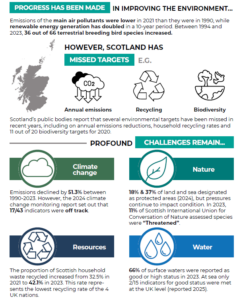
Figure 1 – Infographic providing context on Scotland’s environmental performance
N.B.: Figures presented are from Scottish Government Official Statistics and/or relevant public authority reports. The original sources provide detailed descriptions for calculating statistics, important context, and any limitations or assumptions.
[1] Biodiversity is defined by the United Nations Convention on Biological Diversity as “The variability among living organisms from all sources including … terrestrial, marine and other aquatic ecosystems and the ecological complexes of which they are part; this includes diversity within species, between species and ecosystems.”
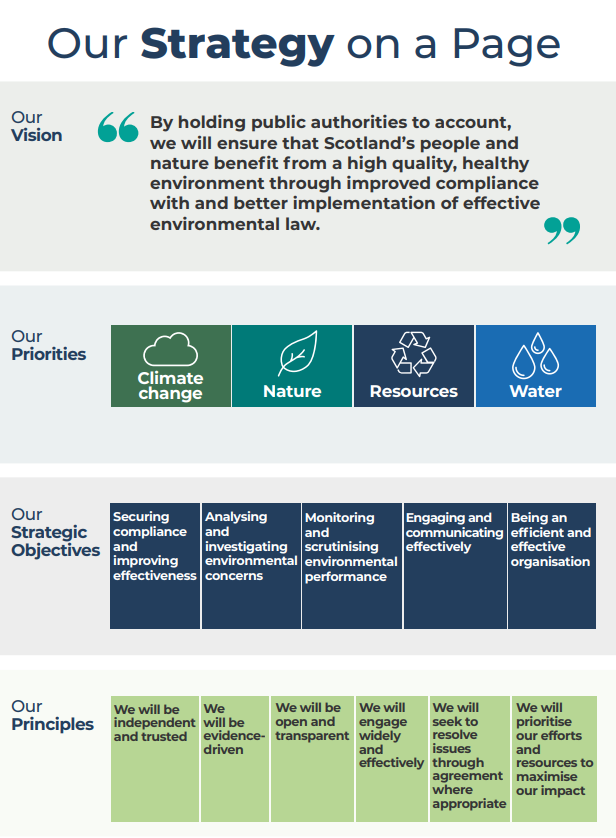
By holding public authorities to account, we will ensure that Scotland’s people and nature benefit from a high-quality, healthy environment through improved compliance with and better implementation

Woman walking up Quiraing, Isle of Skye
We will:
3.1
We will continue to consider all representations raised with us by members of the public on any environmental topic. We will signpost people to relevant organisations if their concern does not fall within our remit.
3.2
Alongside this, most of our proactive work will focus on four interconnected priorities:
Climate change: driving climate change mitigation and adaptation
Nature: reversing biodiversity loss and delivering healthy ecosystems
Resources: securing sustainable resource use, reducing waste and developing a circular economy
Water: protecting Scotland’s freshwater, coastal and marine systems
3.3
We have chosen these priorities because they include the two fundamental challenges of climate change and biodiversity decline, issues of public concern and areas where performance is declining or is not on track to achieve Scotland’s existing targets or commitments. They also represent the areas where we consider that ESS can make the most significant impact.
3.4
The majority of our proactive work over the next five years will concentrate on these four priorities. We will retain some flexibility to ensure that we can undertake work in other important and emerging areas and, as noted above, we will continue to consider representations on all topics.
3.5
We will also continue to monitor and follow-up on our previous scrutiny work, for example, on air and water pollution, soils and access to environmental justice to ensure that the necessary action is taken to address the shortcomings that we have identified.
3.6
We may also choose to scrutinise thematic or cross-cutting issues that span more than one priority (for example, public bodies’ approaches to enforcement, or compliance with the environmental principles set out in the Continuity Act).
3.7
We will consider interactions between our four priorities and how improvements to the implementation of environmental law can secure better environmental outcomes overall. We also recognise that how public authorities manage and regulate our environment can have impacts beyond Scotland, for example, in how we manage our use of resources and dispose of waste.
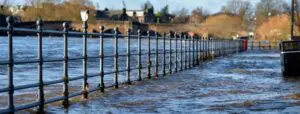
Flooded walkway in Dumfries

Giant Hogweed growing in a field of grass
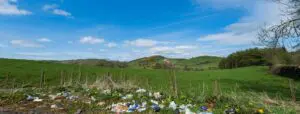
Litter on the side of highway
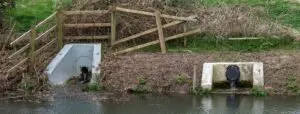
Storm overflows
3.8
When deciding what investigative and analytical work to prioritise, we will consider the following criteria:
Impact -the size and risk of the potential impact (including cumulative impact) on the environment and/or public health and the urgency with which improvement is required.
Character and scope -recent trends in performance, whether the issue is systemic or longstanding, the spatial distribution of the issue and the impact on communities, levels of public concern and the international context.
Neglect – whether there has been action taken on the issue recently, or further action is planned by relevant public authorities in the near future.
Added value – the contribution we can make, considering whether there are other oversight or scrutiny bodies who are taking/could take action to address concerns, the resourcing implicatins for ESS.
3.9
Further information on which specific issues have been prioritised for investigation or analysis and why, will be provided in our annual business plans and on our website.
3.10
This Strategy will guide ESS’ approach to delivering its work. A number of related documents provide more operational detail (Figure 2).
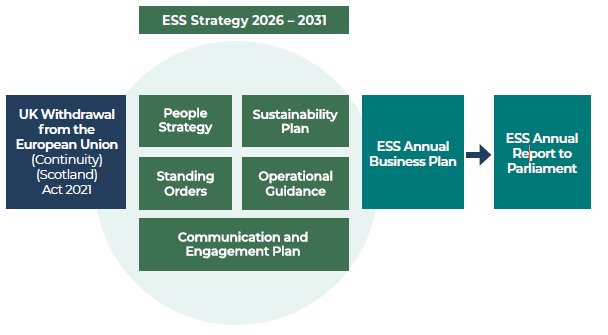
Figure 2 – ESS’ Strategy and related documents
Objective 1. Securing compliance and improving effectiveness
Objective 2. Analysing and investigating environmental concerns
Objective 3. Monitoring and scrutinising environmental performance
Objective 4. Engaging and communicating effectively
Objective 5. Being an efficient and effective organisation
4.1
Environmental law exists to protect and improve the environment and human health. Public authorities have an essential role to play in complying with environmental law and ensuring that it is implemented effectively. ESS has significant statutory powers to secure public authorities’ compliance with environmental law and to bring about improvements to the effectiveness of environmental law and how it is implemented or applied (Table 1), with the aim of protecting and improving the environment and public health.
4.2
ESS will take action to ensure public authorities’ compliance with environmental law. We will also take steps to improve the effectiveness of environmental law and how it is implemented or applied.
4.3
By law, public authorities must cooperate with ESS to resolve matters quickly and in line with the Continuity Act and our principles, we will seek to reach agreement with public authorities on action needed to protect the environment before using our enforcement powers.
4.4
Where we have identified evidence of a failure to comply with environmental law or ineffective environmental law or implementation, we may contact the relevant public authority(s) to explain our concerns and the reasons for these. We will then invite representatives of the public authority to discuss and agree, within a reasonable timescale, suitable compliance measures and/or improvement measures. Alternatively, where there is a justification, we will set out in advance any measures that we consider are required to resolve the failure.
4.5
Where agreement on the measures to be taken is reached, we will agree with the public authority a reasonable timescale for implementation and explain the evidence required to confirm compliance. We will record and publish the measures agreed and will monitor implementation for future reporting and analysis.
4.6
Where necessary, we will consider using our statutory powers (see Table 1).
4.7
We will issue a compliance notice where we consider that:
4.8
We will issue an improvement report where we consider that:
4.9
We will prepare improvement reports where we consider that a compliance notice will not resolve the issue. This could be where the function being exercised by the public authority is not covered by a compliance notice (e.g. a non-regulatory function such as reporting). We will also issue an improvement report where there has been a systemic failure. We define this as a problem that goes beyond the actions of a single public authority, and reflects a pattern of conduct across multiple authorities, which points towards a structural flaw in the system.
4.10
A systemic failure may also be where there is a need to review and amend relevant legislation. We will also consider the impact of cumulative and in-combination impacts and their contribution to systemic failure.
4.11
We will consider applying for a judicial review (or applying to intervene in existing civil proceedings) if we believe that both the failure to comply by a public authority is serious and that the environmental harm caused (or at risk of occurring) is serious.
4.12
To determine whether the conduct constitutes a serious failure to comply with environmental law we will consider:
4.13
To determine whether it is necessary to make the application for judicial review to prevent, or mitigate, serious environmental harm we will consider:
4.14
In deciding what action is required, ESS will take into account whether immediate action is necessary to protect the environment.
4.15
Enforcement action can result from any part of our investigatory, analytical or monitoring work. Where we decide to take enforcement action, we will be clear on the nature of the environmental failing and the changes and outcomes required and we will ensure the necessary steps are taken within agreed timescales.
4.16
We will report publicly on all enforcement action, including what has been agreed with public authorities, the results of our monitoring of implementation and the environmental outcomes achieved.
Table 1 – ESS’ Statutory Powers
| Statutory Power | Description |
| Information notice | Requires a public authority to provide us with any information we need to be able to carry out our functions. |
| Improvement report | Report to the Scottish Parliament setting out what a public authority must do to comply with environmental law or to improve effectiveness. The Scottish Government must respond to the report by submitting an Improvement Plan to the Scottish Parliament for approval. |
| Compliance notice | Requires a public authority to take steps within a specified timescale to address a failure to comply with environmental law and to prevent that failure being repeated. |
| Judicial review | Enables ESS to apply for judicial review or to intervene in other civil court proceedings where there is a serious failure to comply with environmental law and where there is a risk of serious environmental harm. |
4.17
Ensuring that we analyse and investigate the most important environmental concerns is fundamental to ESS’ work. We have two mechanisms to do this (Figure 3):

ESS staff member presenting on a piece of work
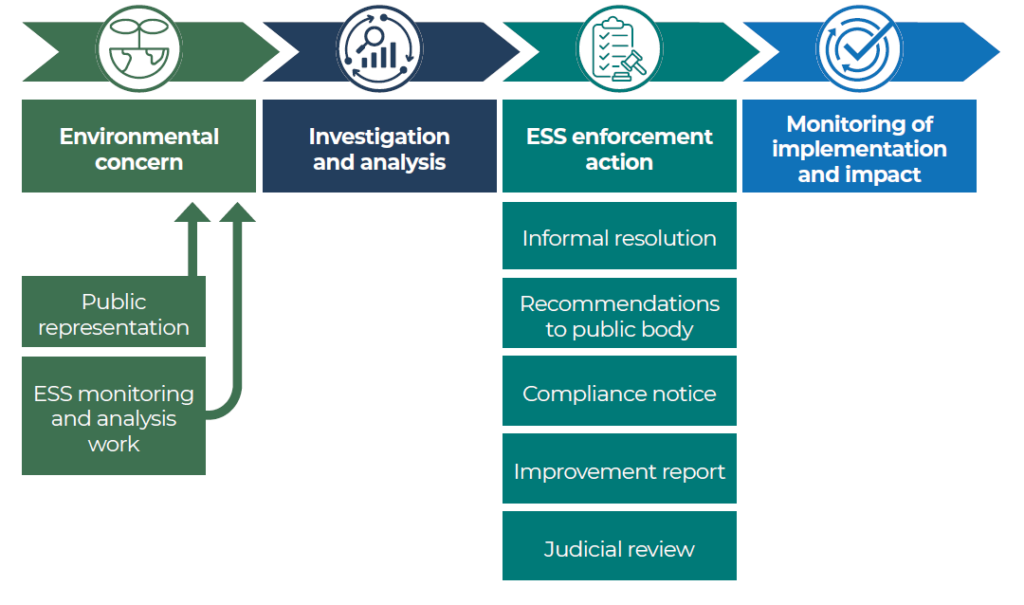
Figure 3 – ESS’ process for scrutinising environmental concerns
4.18
We will assess the concerns identified in representations made to us that fall within our remit and will consider the following factors when deciding whether to investigate:
4.19
We will prioritise investigative and analytical work using the criteria set out at section 3.8.
4.20
In all of our work we will gather and assess evidence, engage with the relevant public authority(s) and other stakeholders, and may seek independent, external expert advice if we consider it necessary to reach a full and robust decision.
4.21
Our analytical work may lead to further investigatory work or may be published in its own right. Reports may also contain recommendations that we expect public authorities to respond to. Figure 3 outlines the process by which concerns identified through our proactive work or via a representation, can progress to investigation, analysis and enforcement. The pre-investigation, investigation and analysis stages can lead to three outcomes: that further work is necessary, that change is recommended (and enforcement action will result), or alternatively that no further work is required. More detail on our approach to analytical and investigatory work is available on our website.
4.22
ESS will try to respond to concerns raised in representations as efficiently as possible. Any parties who have been involved in our consideration of a matter (including those who made the representation) will be informed of our service standards and updated regularly in line with them. We will publish full details of what we have concluded, what action we think needs to be taken and, where relevant, what changes have been agreed with public authorities.
4.23
If an issue brought to us is not within our remit, or we decide not to take it forward, we will explain and publish the reasons why. In such cases we will provide as much assistance as possible, including signposting to other organisations that are better placed to help.
4.24
In all of our analytical and investigatory work we will consider relevant international obligations, standards and laws. We will pay particular attention to maintaining alignment with positive developments in environmental policy, law and regulation in the European Union and will also look globally to identify further examples of good practice across the full breadth of our remit.
4.25
We use data, evidence and research to understand the state of the Scottish environment, particularly where performance or progress is inadequate to meet Scotland’s ambitions. This allows ESS to identify areas where there may be noncompliance with environmental law, or ineffective law or implementation.
4.26
We will cast our net widely, bringing together and synthesising evidence from a range of sources. To do so, we will engage with relevant public authorities, evidence partners, research institutions, citizen scientists and wider stakeholders to understand the current situation and to help inform any subsequent investigation or analysis.
4.27
Occasionally, where existing evidence is insufficient to enable us to draw conclusions, we may commission work ourselves or in partnership, or identify where further research and evidence gathering is required by others (for example, as outlined in our Areas of Research Interest). We will quality assure the data and evidence that we draw upon to ensure that our conclusions are robust and based on relevant, appropriate and up to date information.
4.28
ESS will maintain its independence and also strive to be a well-networked and connected organisation. To achieve this, we engage widely with other organisations that collect data on the environment and who scrutinise and evaluate environmental performance and the effectiveness of environmental law. We seek opportunities to bring together and to work in partnership with others to drive improvements in how data and evidence on Scotland’s environmental performance is monitored and reported.
4.29
We may issue our own calls for evidence to gather insights from a variety of stakeholders (including from those involved in implementing environmental law), about compliance, how the law is working in practice, and whether the tools and measures available are sufficient and effective. These calls provide further opportunities to engage with practitioners on specific topics and tap into local knowledge.
4.30
We will respond, as appropriate, to consultations and calls for views on environmental law from the Scottish Parliament, the Scottish Government and other public authorities. Our growing body of work will provide insights into how environmental law can be established, improved or implemented most effectively.
4.31
Over the period of this Strategy, we will prepare for, integrate and then start delivering new aspects of scrutiny, including:
4.32
When responding to any proposals for new duties or functions, ESS will consider them against four criteria that have been set by our Board. These are that any new proposal must:
4.33
To realise ESS’ vision, we must communicate and engage effectively. Drawing on our principles, our approach to communications and engagement will be as follows:
4.34
Being a well-connected and networked organisation is critical to ESS’ ability to fulfil its functions effectively and efficiently. We will engage regularly, and at a variety of levels, with a broad range of stakeholders, including the public authorities we scrutinise. We will engage widely to raise the profile of ESS and increase understanding of our remit and our work and will seek to collaborate with other bodies whose work aligns with our goals. Strong relationships with our stakeholders will ensure:
4.35
We will continue to engage in person with communities (particularly underrepresented and disadvantaged groups) across the mainland and islands of Scotland to understand and discuss the environmental issues which affect them. This work is done through our Community Engagement Programme which will continue to promote and explain ESS’ role, ensuring that it is widely understood and that communities and individuals are confident in raising their environmental concerns with us.
4.36
We are committed to ensuring that our work is well understood and will continue to develop our suite of publications to ensure that they are accessible to all (for example, through short summaries of detailed reports, easy read documents where appropriate and improvements to our website). More detail on our approach to engagement and communicating our work can be found in our Communication and Engagement Plan (published alongside this Strategy).
4.37
ESS is accountable to the Scottish Parliament. To complement our statutory annual reporting, we will provide the Parliament with regular updates on our work and respond to its requests to contribute to scrutiny and other work.
4.38
ESS is led by a Board of between five and seven members with substantial knowledge and experience across a variety of environmental, legislative and corporate areas. Scottish Ministers appoint Board members using a regulated appointments process, following approval from the Scottish Parliament. The Board’s operation is governed by its Standing Orders. ESS’ Framework Document sets out the relationship between ESS, the Scottish Parliament and Scottish Ministers with regards to governance, finance and the operation and functions of the organisation.
4.39
ESS also has an Audit and Risk Committee, which supports and advises the Board in relation to its responsibilities for risk, control, governance and assurance through a process of constructive challenge. The Committee focuses on ESS’ internal and external audit processes and the production of the Annual Report and Accounts, including the governance statement. The Committee’s Terms of Reference sets out membership and responsibilities.
4.40
We employ a team of skilled, motivated people with a broad range of professional expertise. We have a blend of different contract types (permanent and fixed-term contracts, secondments, and internships/placements). We aim to have a professional and trusting working culture with respect and empowerment being at the core of how we work. We will ensure that all members of our team are able to continue to develop and have the space and opportunity to try new ideas and innovations.
4.41
ESS’ People Strategy is made up of three pillars:
4.42
We prioritise diversity, equality and inclusion, and wellbeing. This is reflected through our Equalities and Diversity Policy principles of respect, inclusivity and fairness.
4.43
We complement our team with support from other organisations. This includes operational advice such as legal, human resources, cyber security and information technology advice. We are continually improving our processes and as part of the wider public service reform agenda we will explore opportunities to collaborate with others, beyond our current arrangement of sharing our office with another public body.
4.44
ESS must meet the public sector duties set out in the Climate Change (Scotland) Act 2009 and the Nature Conservation (Scotland) Act 2004. Our Sustainability Plan sets out our approach to reducing emissions, contributing to reaching net zero by 2045, adapting to climate change and furthering the conservation of biodiversity. Our plan aspires to be an example of good practice.
4.45
We operate in accordance with the Public Finance and Accountability (Scotland) Act 2000 and the Scottish Public Finance Manual. We have Board and staff champions for equality, cyber security and sustainability whose role is to drive progress and action. We have secure governance and financial management and effective corporate functions.
4.46
We will continue to maintain a clear approach to how we allocate and prioritise our spending to ensure best value. We will continue to maintain a clear approach to how we allocate and prioritise our spending to ensure best value.
4.47
Every year, we will write to the Scottish Parliament setting out whether we consider the draft budget allocated to ESS to be sufficient for the following year. Within our annual report, and as required by the Continuity Act, we will report on whether ESS’ budget enabled us to deliver our functions during the preceding year.
4.48
We will publish an Annual Business Plan at the start of each financial year. This will set out the work we plan to do and the outputs we aim to publish. We plan to review our Strategy during 2030 and to submit a revised Strategy to the Scottish Parliament for approval in early 2031.

People waking down a busy street in a city centre
5.1
We evaluate both the impact of our work and the effectiveness of how we work. We use a theory of change approach to demonstrate how our scrutiny work has an impact on the environment. We also utilise key performance indicators (KPIs) and performance management indicators (PMIs) to measure our organisational performance. We are committed to publishing information on both on our website. Together these approaches will enable us to assess how well we are achieving our vision (see Figure 4).
5.2
For each of our major investigations and analytical projects that make recommendations for improvement, we will prepare a theory of change to explain how the actions taken by ESS are expected to contribute ultimately to improved environmental outcomes. We will include details of these in our publications.
5.3
Each theory of change will set out the intended improvements to environmental law and regulation, the chain of events that is expected to result in improvements, any key assumptions that underpin our theory of change and the wider context. Each theory of change will also identify specific indicators that ESS will use to track improvements in areas of the environment in which ESS has acted. In addition to these indicators, we will commission detailed case studies on a three-yearly basis to examine the long-term outcomes of our work and ESS’ contribution to changes in law, policy and regulation.
5.4
Those improvements should, alongside other contributing factors, lead to better environmental outcomes for nature and people and contribute to the achievement of Scotland’s ambitions for the environment and climate change.

Flow County peat bogs at Forsinard, Scotland
5.5
We will measure our organisational effectiveness on a regular basis using PMIs and KPIs.
5.6
Our PMIs include a wide range of operational and management information related to our investigation and analysis work, our engagement and profile, delivery against our People Strategy pillars, delivery of our annual Business Plan objectives and compliance with governance and financial reporting requirements.
5.7
These PMIs are organised under three KPIs: Performance, People and Profile. This will enable us to describe and explain our progress each year in a qualitative and quantitative way.
5.8
Our KPIs will remain constant across the period of this Strategy. However, to enable a flexible approach, and to build more challenge into our KPIs over time, we will regularly review our PMIs, which may be added to, or enhanced, where additional insight is required. Details of our indicators are published alongside this Strategy.
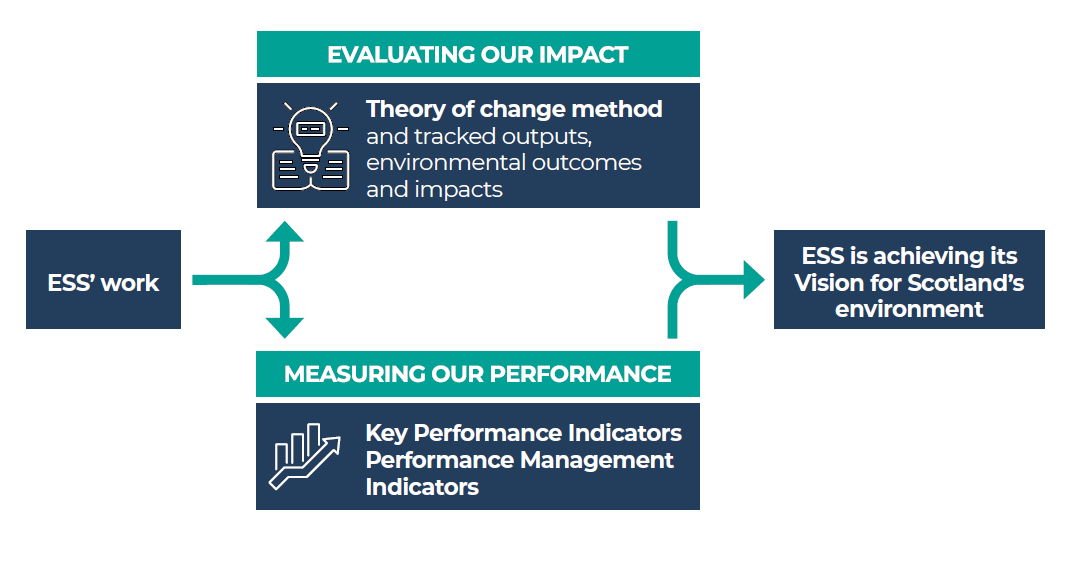
Figure 4 – ESS ‘ approach to assessing impact and performance